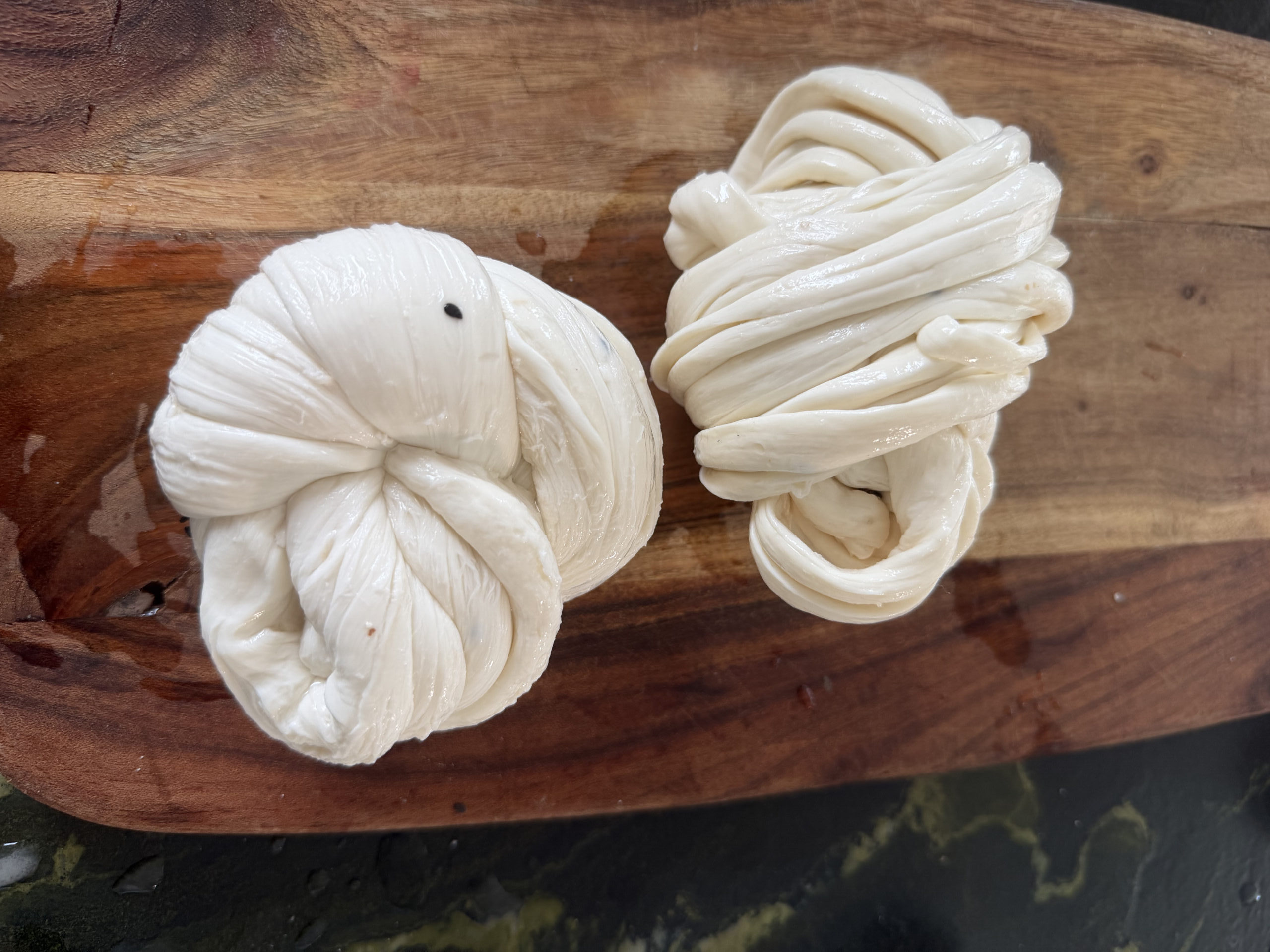
Watching it being made at home, it feels simple but precise—hands stretching, folding, pulling. No measurements, just rhythm. The strands come together slowly, and you realize this isn’t just cheese, but a technique passed down, still alive in the kitchen.
In the Levant, string cheese was traditionally made from fresh sheep or goat milk, worked by hand in village homes. After the milk curdled, the curds were gently heated and stretched—a process now known as pasta filata. As the curds became elastic, they were pulled into long strands, then braided or tied before being preserved in brine.
This method reflects a shared tradition across the region, but Armenian communities—especially those who settled in places like Syria and Lebanon—helped shape the braided form and its distinct flavors, often adding nigella or mahleb.
JOIN SUBSTACK FOR FULL RECIPE SylvaAlexia.substack.com
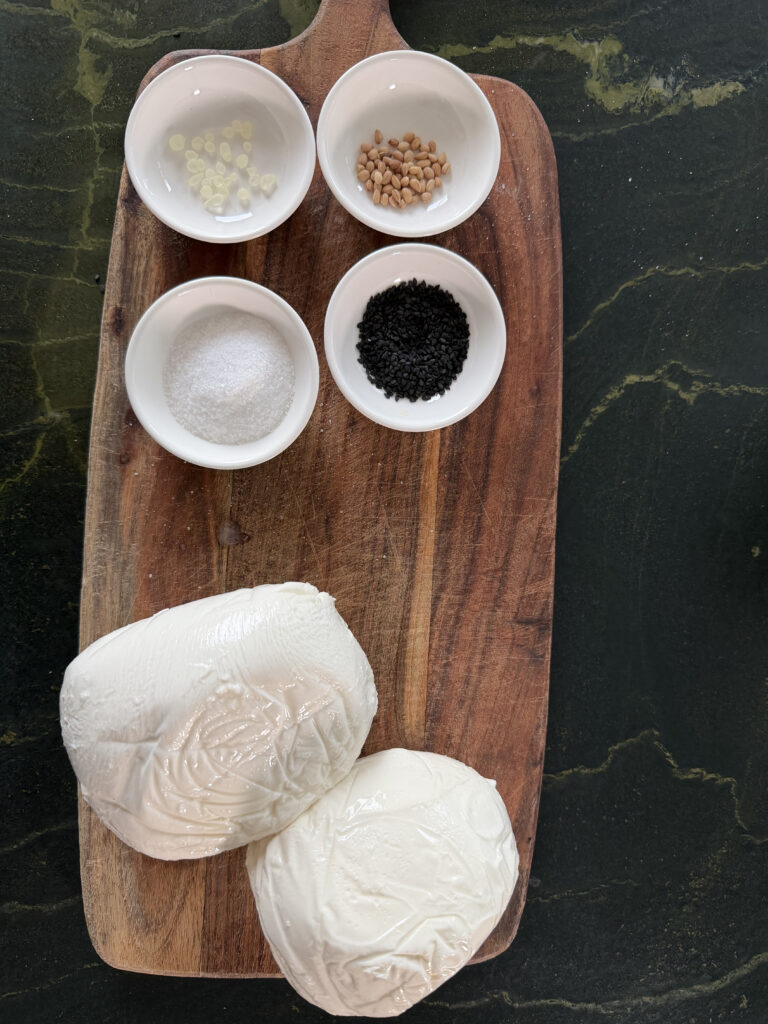
Ingredients:
- 2 lbs fresh mozzarella (cut into chunks)
- 1.5–2 tbsp salt
- 1–2 tsp nigella seeds
- ¼ tsp Ma……
For Full Recipe:
For the full recipe and more, join us on Substack.
Sylva Alexia shares on Substack blogs, recipes, and one-on-one Q&A, Zoom recipe cooking.
SylvaAlexia.substack.com Click on the link